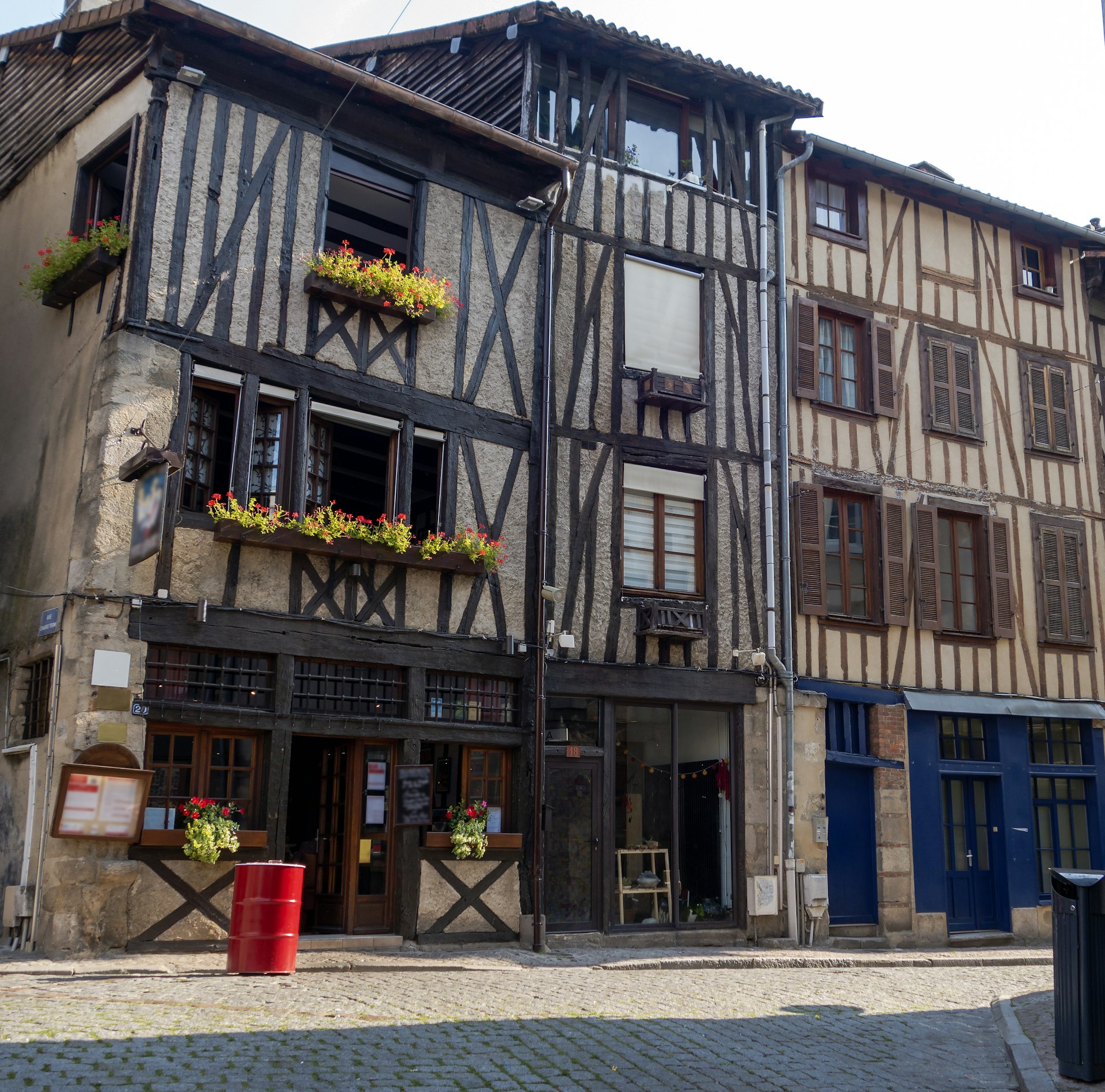
Limoges France

Discover Limoges with pictures
( click here)

2000 years of History

City of Limoges 240 miles South West of Paris on the Vienne River.


Limoges boxes & Limoges Jewelry Chests,
An History of Romance, Love & Passion!


Following a Tradition of Quality & Excellence , the creation of Limoges Porcelain is a laborious and time consuming process involving multiple firings and glazing. The final firing at a temperature of 1400C is unique to Limoges, giving them a very fine pure and strong white finish. The Painting of the Limoges boxes is a cottage industry often accomplished by young French women, experts at the fine brush strokes required for such detailed work. After painting, there are more firings after which the metal mountings are meticulously fitted to the finished box. The entire work process is made by hand, so small variations are the norm, thus making each piece really unique. Each model is made in very limited numbers, & signed by the Artists or the Atelier, which make them very rare & collectable.

The history of Limoges Porcelain started in the mid-1750 when, Jacques Turgot, Finance Minister of King Louis XVI helped the city of Limoges with a Royal edict giving the exclusive title to produce Royal Porcelain for the Kingdom of France. Legend has it that the very first patron of the porcelain boxes was the Marquis of Pompadour, who ordered them as gifts for his Lady's friends. Long, narrow ones were containers for scarce and expensive needles. Appropriately shaped boxes held thimbles and embroidery scissors. Round Flat Limoges boxes were used as powder box, or snuff box. But the most interesting use for these lovely objects was as message containers, and many Romantic Rendez-Vous were arranged through them.


Limoges Jewelry Chests were used by French ladies as bedroom conversation pieces. When receiving their lovers for intimate encounters, they would make a comment about how beautiful, and so sadly empty, their Limoges Jewelry chest was. Next time their lover will come, he will not forget to bring a ring, a bracelet or a necklace to make his lady shine and in the mood for Love.

These little boxes became symbol of the highest distinction and fashion when Josephine, wife of Napoleon and Empress of the French Empire, started to collect them in the most intricate designs. After her, all the Royalties in Europe started to collect Limoges boxes. The Tsar of Russia, ordered a special series of eggs to Faberge Jewelers!

As a Symbol of Fertility for the Russian Empress!

Today, Limoges boxes are collected all over the World, but more than just a Collectible, each porcelain Limoges box carries a very personal meaningful message. They symbolize important positive moments in our life: Love, Passion, Celebration, Holidays...  a Limoges box will give the joy of the most important days of our life, and a way to remember it for ever.


From a first romantic date on Valentine's Day, to the most emotional day of your Life when he proposed on his knee, with a diamond ring hide in a Limoges with the message "Will You Marry Me ?" and you said "Yes, I will !"

Limoges is Your symbol
of Love, Passion & Happiness.


The Famous little hinged boxes will go along with the events of your life in such a positive way!
The Perfect Elegant Wedding will be remembered by just looking at your Limoges.
Today Sinclair Limoges carries an incredible selection of intricate Porcelain Limoges Boxes Limited Edition Numbered for every moment for you to express your feelings!
remember:


Express your Love,
Say it with a Limoges!


Limoges dinnerware,
a French American Love Story!


Sinclair Limoges, Collection Royale Decor Versailles

Kaolin, the fine white clay essential to porcelain making, was discovered about 18 miles southwest of Limoges at St. Yrieix in 1765. The first porcelain factory in Limoges was established 6 years later in 1771. Within a few years, the factory became a Branch of the royal manufacture at Sevres; porcelain blanks produced at Limoges during this period were decorated at Sevres. Production stopped in 1791 but was revived in 1797.
The Baignol and Alluaud factories accounted for three quarters of Limoges production in the very early 19th Century. They were paternal overseers, and they frequently labored along side their workers. In spite of good labor relations and ability to increase production, deflated markets and constant wars limited the expansion of the porcelain industry. Prospects brightened during the restoration, and Limoges was well situated for expansion of its porcelain industry. Firstly, it had the kaolin deposits at St. Yrieix. The forests of the Limousin supplied the massive quantities of wood needed to fire the kilns. The Vienne River floated the logs to Limoges and supplied the power to pulverize and work the clay. Abundant workers were willing to leave the infertile surrounding land and work in the factories.
Production costs and labor were lower in the provinces than in Paris, and several porcelain factories relocated from Paris to the provinces. Some came to Limoges. Four porcelain factories in Limoges in 1819 had increased to nine by 1824. The Limoges porcelain industry employed 800-900 workers in 1828, second only to the textile industry. Limoges' other, much less significant, industries were tanning, paper making (100 workers), bookbinding and printing, a manufacture of weights and measured (75 workers), and numerous lesser industries, including a few "silver and enamel workers with little but centuries of proud tradition to support them."Increased production and lower production costs reduced retail prices and stimulated demand. At the same time German, Spanish and Italian markets opened to French porcelain. Thus, Limoges prospered despite the economic crisis of 1826-7, although there were two bankruptcies during the 1820's. The population of Limoges in 1831 was about 6,700 households with over 27,000 people.
Some of the steps in the production of Limoges porcelain

  • Kaolin is extracted from the quarries and transported to the mills
  • The clay is dried in the sun and visible impurities removed
  • The clay is ground to a smooth texture, passed through a silk screen, formed into balls and delivered to the factory
  • The pasty clay is beaten and kneaded to remove air bubbles
  • Turners shape the paste on a wheel, using a knife
  • Molders again remove impurities and further shape each piece
  • The pieces are baked in enormous ovens at a low temperature
  • The low-fired pieces are dipped in a water emulsion of feldspar and powdered quartz
  • The dipped pieces are fired at very high temperatures for 30 to 45 hours. The men responsible for this firing stayed at work for the entire preparation and actual firing. They worked extremely long hours.
  • The fired porcelain is checked for imperfections, and the acceptable pieces are burnished and polished. This produces the fine, pure white porcelain, which was the most popular variety at the time; but some of the porcelain was not left plain.
  • Porcelain artists add the painted decoration and final touches; these artisans usually worked at home.
  • The painted porcelain is fired at low temperature in smaller ovens to fix the decoration.

Work in the porcelain factories was hard work, with up to 14 hour work days, and the dust and chemicals made conditions very unhealthy. Tuberculosis and other diseases were very common. The work also was diverse; there were about 37 different occupations within the porcelain industry
Growth during the 1830's, 40's and 50's

Production fell during the economic crises accompanying the revolution of 1830, and output did not return to the 1829 level until 1833. During the downturn, wages were cut 20%, and labor discontent fomented. In spite of economic crises during the 1830's and 40's, porcelain production increased dramatically, growing from 11 factories with 1,200 workers in 1837 to 27 factories with 3,166 workers in 1861. Major factors in this growth were

  • the gradual transfer from wood to coal to fire the furnaces. Firing a furnace required only half the tonnage of coal as of wood. The price of wood increased by about 40% from 1856 to 1862, so the timing of the change to coal was quite fortunate. Sixteen of the forty kilns in Limoges had converted to coal by 1861.
  • the arrival of the railway in 1856. This reduced the cost of materials, and it gave improved access to new markets. Factories surrounding Limoges closed, because access to the railroad outweighed the slightly lower labor cost outside the city.
  • the liberalization of tariffs by the Cobden-Chevalier Treaty of 1860.


HAVILAND


Although Limoges had won a major share of the French market for porcelain, by the late 1850's, about half of the porcelain produced in Limoges was exported to the United States. The growth of exports to other countries only somewhat reduced the devastating effect of the Civil War on exports to the US.


More questions, got ideas to improve our service to you, do not hesitate to contact us with your suggestions:
www.Limogesboxclub.com
10760 Paris Street
Pembroke Pines, FL 33026
request@limogesboxclub.com
Phone & Fax: 954-559-9195
Open Monday to Friday from 9am to 6 PM eastern time
Contact: Lydia Hanni, Hughes
The Limoges web site powered by Human Limoges Collectors!

As a Limoges Collector Club VIP member, with your first Order of a Limoges box receive
$100 in Gift Certificate to redeem (one per stay) on your next 4 Days-3 Nights or 8 Days-7 Nights Beach Getaway Vacation in our Villa Hotel in Hollywood Beach Florida. $100 valid from the Bar, Spa & other Services at Villa-Sinclair.com Beach Suites & SPA
317 Polk Street, Hollywood Beach Fl 33019 Reservation: 1-954-450-0000


See What Newly Wed, First French Lady, Carla Bruni-Sarkozy, Got for Valentine's Day!
Decouverez le Cadeau de La Saint Valentin de la Premiere Dame de France, Jeune Marriee, Carla Bruni-Sarkozy...
World Press Release:

 
Click to see what  France's First lady, Carla Bruni received for Valentine 2008

Click to see Sinclair Limoges on YouTube.com

Limoges Box Wholesale to the Public
Give the Perfect Gift & Save
50% OFF on the 2nd, 3rd, 4th Limoges boxes
or more ordered at once*
+

3,000 Hand Painted Limoges boxes
reduced to $99 each or less (50% to 80% Off)
+
Buy 3 Limoges boxes or more at once
Get FREE Insured Standard shipping in the USA
+
Buy 4 Limoges boxes of More at once
Get FREE Insured NEXT DAY AIR shipping in the USA
upon request
+
FREE Gift Wrapping + FREE Greeting card
+
$100 in Gift Certificate*  
As a Limoges Collector Club VIP member,
with your first Order of a Limoges box
receive

$100 in Gift Certificate to redeem (one per stay) on your next 8 Days-7 Nights Beach Getaway Vacation in our Villa Hotel in Hollywood Beach Florida. $100 valid from the Bar, Spa & other Services at Villa-Sinclair.com Beach Suites & SPA 317 Polk Street, Hollywood Beach Fl 33019 Reservation: 1-954-450-0000

* upon availability, 50% OFF apply on the least expensive Limoges boxes of your selection

|